Artificial Intelligence and Strategic Decision-Making for Sustainable Governance
DOI:
https://doi.org/10.59543/aspp4925Keywords:
Artificial Intelligence, Strategic Decision-Making, Sustainable Governance, Ethical GovernanceAbstract
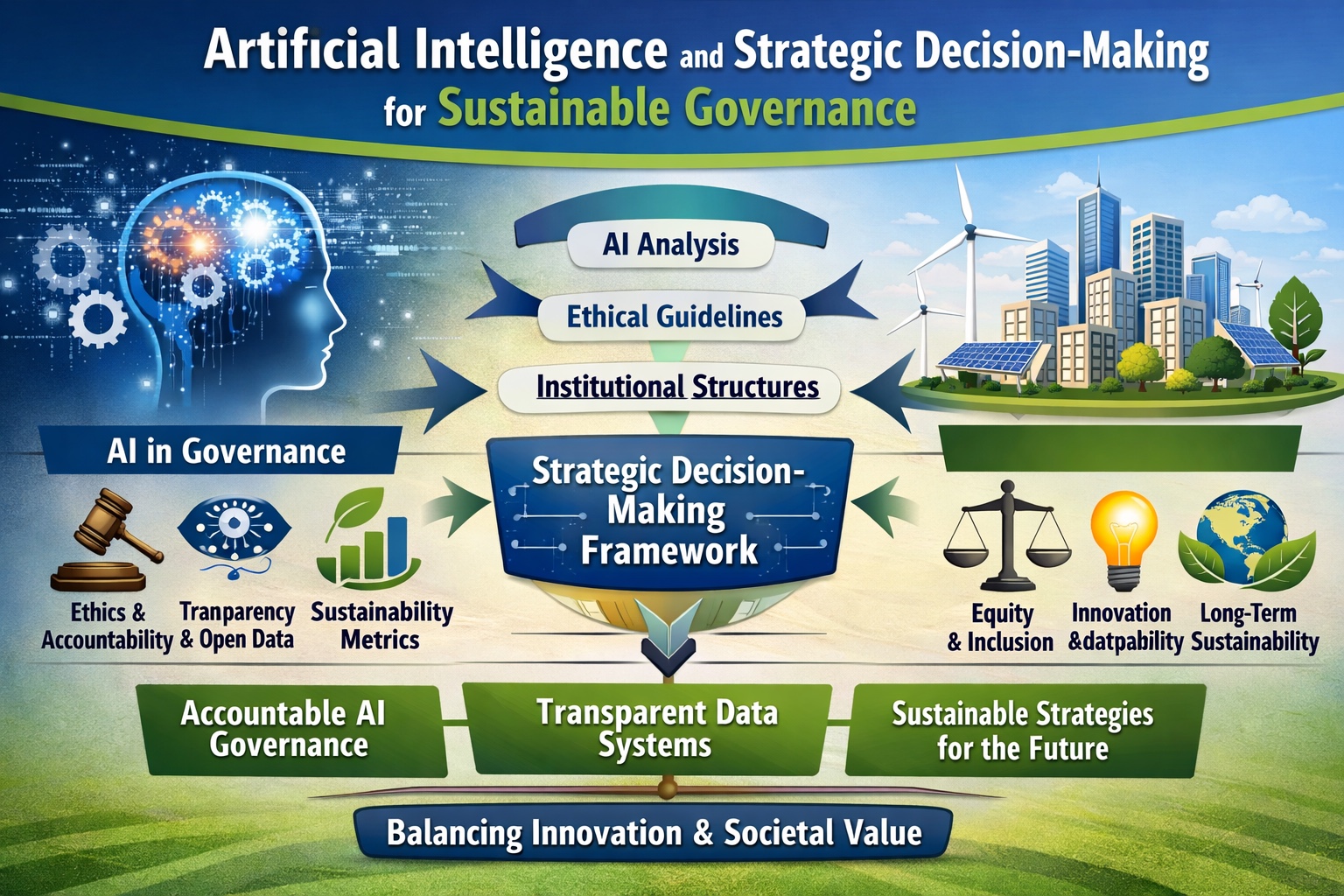
The increasing use of artificial intelligence (AI) in global governance systems could influence how sustainable strategies are developed by governments and other organizations; however, issues related to accountability, ethical alignment, and inclusivity remain challenges for AI analytical precision and prediction capabilities. This study addresses this question about how AI can be systematically integrated into strategic decision-making processes that enhance transparency, adaptability, and long-term sustainability through the development of a theoretical framework connecting artificial intelligence-driven analysis with structures in ethics and institutions to support sustainable governance via data-based evidence from multidisciplinary literature on AI management, sustainability studies, and governance theory using conceptual analytical methods for synthesizing ideas. The main findings are that good AI governance needs clear accountability mechanisms, open data ecosystem transparency, and the inclusion of sustainability metrics within decision algorithms; however, when governed responsibly, artificial intelligence can shift decisions to strategy instead of administration so institutions can maintain innovation while achieving balance between equity and long-term societal value.
Downloads
Published
How to Cite
Issue
Section
License
Copyright (c) 2026 Mohamed Ibrahim Hassan Farag (Author)

This work is licensed under a Creative Commons Attribution 4.0 International License.