Evaluating the Electronic Waste Management System by Using Technique for Order Performance by Similarity to Ideal Solution
DOI:
https://doi.org/10.59543/kadsa.v1i.14685Keywords:
Electronic waste; Waste management; Multi criteria decision making; Environment; Health effects; Solid WasteAbstract
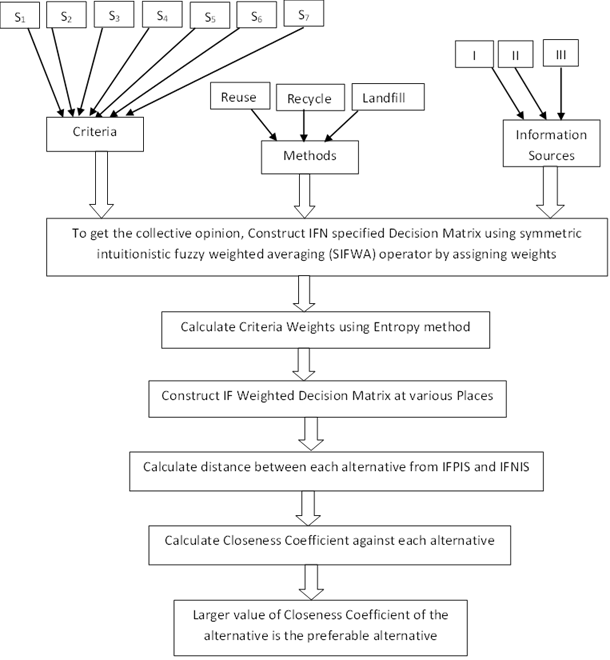
The waste created after the useful life of electronic or electrical products is labeled as electronic waste. Introduction of better and upgraded options into market increase the rate of disposal of obsolete discarded products from the consumer side. Electronic waste contains many toxic ingredients and major toxicants are heavy metal ions that may find the way to environment matrix after improper disposal of products. In recent years due to rapid technological development and industrialization; electronic waste management has become a major challenge throughout the world and receiving an attention from researchers, governments, and public. Poor management of waste may adversely affect the environment and human health. Thus, it is necessary to segregate all e-waste materials at the point of generation, for appropriate treatment/disposal. The assessment of the most suitable and appropriate framework has been a subject of extreme research interest as it involves many conflicting factors such as cost, type of waste, energy consumption, environmental impact of waste residue, rate of waste generation, treatment efficiency, and practical feasibility, consumer awareness, occupational hazards etc. There are numerous constraints and knowledge gaps to plan a feasible strategy in realistic scenario. The exact amount of disposed of e-waste is very difficult to predict because of many reasons including the unavailability of collection units for e-waste as well lack of awareness to consumer regarding its proper way of disposal. Various approaches that have been proposed needs to be analyzed with respect to every individual factor. To address this problem, we have proposed multi-criteria decision-making(MCDM) based Technique for Order Preference by Similarity to Ideal Solution (TOPSIS) method to develop framework that determine the interdependency among different factors and obtained the priority value of each e-waste treatment method for appropriate selection and successful implementation in real scenario. From the results of the given information gathered from 3 sources, it is observed that re-use method is the preferred over recycle and landfill methods. The findings of this study will support the organizations and stakeholders to take suitable steps for the disposal of electronic waste strategies.