A Comprehensive Study on Fault Detection Techniques for Wheel Bearings in Rotating Machinery: Assessment of the LBF-MABAC model Based on Power Strategies
DOI:
https://doi.org/10.59543/kadsa.v2i.14809Keywords:
Bipolar fuzzy logic; Decision-making analysis; Fault detection; Linguistic term sets; Wheel bearing in rotating machinery.Abstract
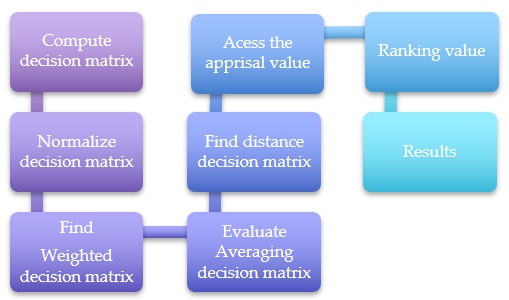
The wheel bearing is a very important part of the car, because they help or supports rotation and reduces friction among moving parts. A detailed investigation and comparison of the many models used to detect faults or failures in wheel bearings, which are critical and complex techniques in rotating machines such as vehicles, turbines, industrial equi⋕ent, and motors. Four main faults are noticed in the wheel bearing, such as: outer race defects, cage defects, ball/roller defects, and inner race defects, but the most important are preventing catastrophic failures, reducing downtime and repair costs with enables predictive maintenance. The main theme of this study is to choose or develop a technique for engineers’ implementation of condition monitoring systems; therefore, first, we design the model of the linguistic bipolar fuzzy technique, then we evaluate the models of “power averaging technique” and “power geometric technique” for linguistic bipolar fuzzy models. Additionally, we also construct the model of the “multi-attribute border approximation area comparison” technique, which is used for the assessment of the fault detection techniques for wheel bearing in rotating machinery. Finally, we illustrate numerical examples to describe the comparative analysis between our ranking values and the ranking values of old models, to mention the advantages and disadvantages of all approaches.